In the glass
Ruby, tawny or white: port styles
White, ruby, reserve, tawny, colheita, rosé: what the names on a port label mean, and how to tell the styles apart at a Gaia tasting.
Book the cellar tour with fado ↗Two families and a few outsiders
Most port falls into two families, defined by how it ages. Ruby-style ports are kept from the air to preserve colour and fruit. Tawny-style ports age in wooden casks and slowly oxidise. Around them sit white port, made from white grapes, and rosé, a newer style. The IVDP, the body that regulates port, splits the range into standard ports and special categories. Once you know the families, a tasting menu stops looking like a list of codes.
White port
White port comes from white grapes only and is made in a range of sweetness, from extra dry through dry and sweet to the very sweet style called lágrima, according to the IVDP. Young whites are fresh and fruity; whites aged for years in wood take on a golden colour close to an old tawny. The institute suggests serving white port chilled as an aperitif, and dry white is the base of the Portonic, port with tonic water, ice and a slice of lemon.
The ruby family
Ruby port is young, deep red and fruity. Above it the IVDP lists reserve, a selection of better wines blended for intensity, then late bottled vintage, or LBV, a single-year wine bottled after four to six years in wood, and finally vintage port, from one exceptional harvest, bottled early and meant to develop for decades. A reserve-level wine, like the special reserve poured on the fado tour, is a sensible step up from a basic ruby or tawny.
The tawny family
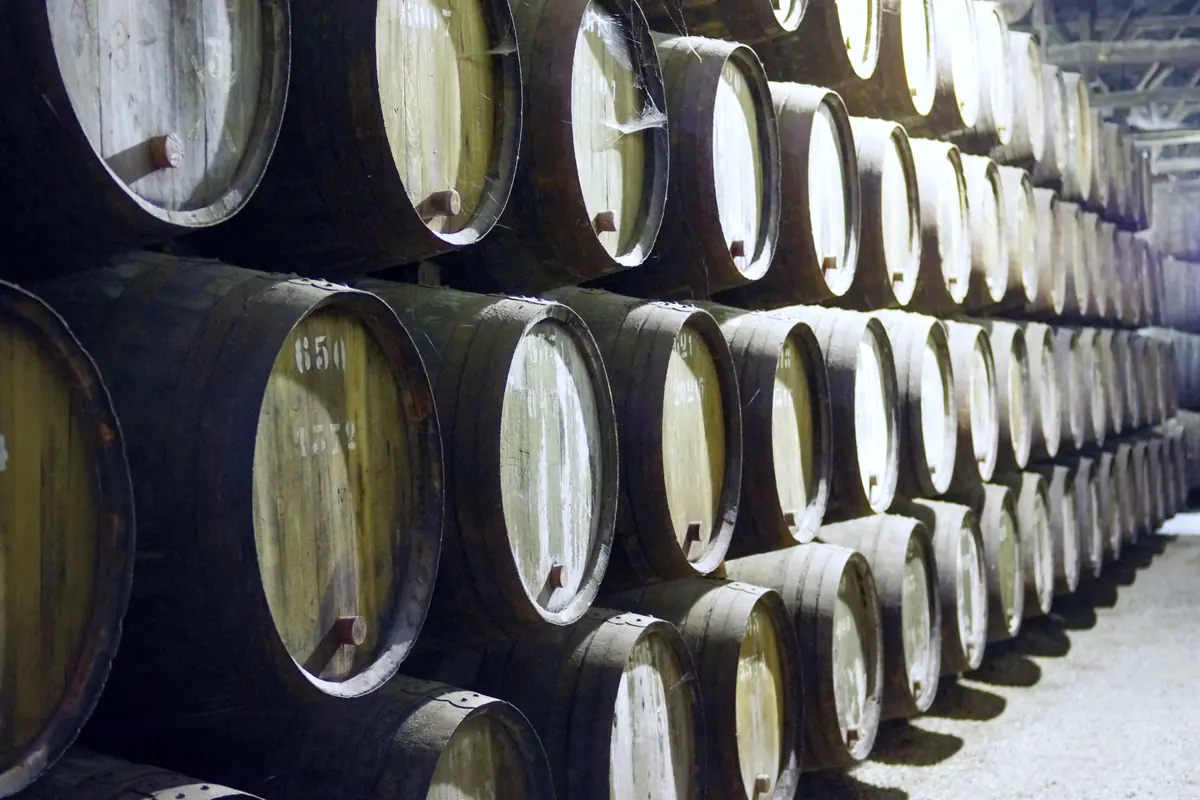
Tawnies spend their lives in wooden casks. Air passes slowly through the wood, the colour fades from red to amber and gold, and flavours of dried fruit, nuts and wood develop. Tawny with an indication of age carries 10, 20, 30 or 40 years on the label: a blend of several years that shows the character of that age, not the exact age of every drop. Colheita is a tawny from a single harvest year, aged in wood for at least seven years. These are the wines in the barrels you walk past in a Gaia lodge.
Rosé
Rosé port is the youngest idea on the list. The IVDP describes it as made by a light maceration of red grapes, with no oxidation while it is kept, and intended to be drunk young. It tastes of red berries and works chilled, over ice or in cocktails. It is the least traditional of the styles, and you will not always find it on a lodge tasting.
How to taste at a lodge
Start with the lightest wine and work up: white first, then ruby-family wines, then tawnies. Look at the colour against a white surface, since it tells you a lot about how the wine aged. Sip, rather than drink, because port runs at 19 to 22 per cent alcohol. A glass of water between styles helps. On the fado tour you have two glasses during the music; on longer tastings, a little food alongside makes the stronger wines easier to enjoy.
Which style with what
The IVDP's own serving suggestions make a good cheat sheet. A chilled white port goes with toasted almonds or smoked salmon before a meal. A 10-year-old tawny, served cool, suits pâté, strong cheese and nuts. A young late bottled vintage stands up to chocolate desserts, while older tawnies of 20 years and more are for slow sipping with coffee. If you only have two glasses, as on the fado tour, start with the white and finish with the richer reserve.
Sources