The music
Fado for first-time listeners
Where fado comes from, what the Portuguese guitar does, what saudade means and how to listen, so a short set in a Gaia cellar means more.
Book the cellar tour with fado ↗What fado is
Fado is Portugal's best-known song tradition: a single voice, accompanied by guitars, singing verses that are often, though not always, about longing, loss, the sea and the life of ordinary people. The word probably comes from the Latin for fate. In 2011 UNESCO put fado on its heritage list for living traditions, describing a mix of influences, from Afro-Brazilian sung dances to rural songs brought to the capital by migrants.
Born in Lisbon, sung everywhere
Historians trace fado to Lisbon in the 1820s, in working neighbourhoods such as Alfama and Mouraria, though its roots are probably older. A second tradition grew in Coimbra, tied to its university and sung by men in academic dress. Porto has no claim to be fado's birthplace, but the music is performed here for residents and visitors alike, and the city's merchants once played one of the Portuguese guitar's ancestors, an English cittern, in their homes.
The Portuguese guitar
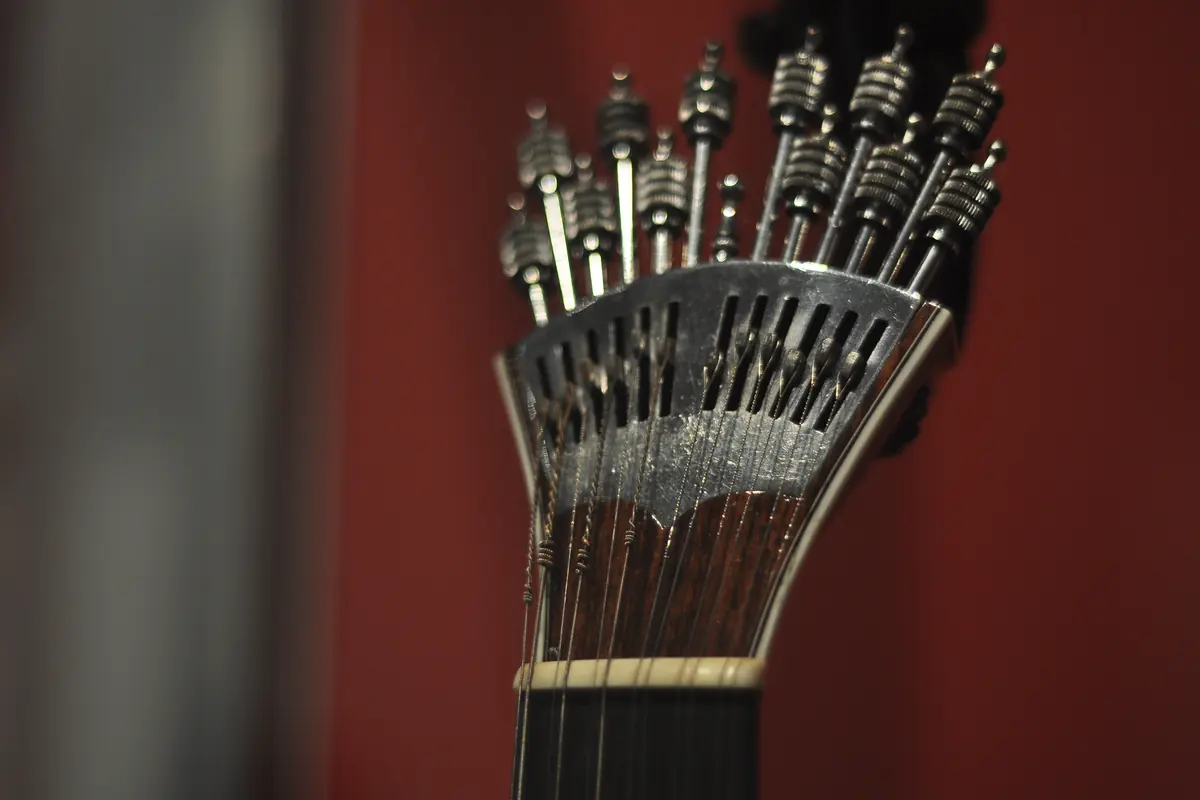
The instrument that gives fado its sound has twelve steel strings, strung as six doubled courses, and a rounded, pear-shaped body. Its fan of watch-key tuners is easy to spot. It plays the melody and the ornaments around the voice, while a steel-strung classical guitar, the viola, keeps the harmony and rhythm. There are two models: the Lisbon guitar, brighter and pitched higher, and the darker Coimbra guitar. On the Cálem tour you hear the classic pairing of a Portuguese guitar and a classical guitar.
Saudade, and other moods
Fado is closely linked to saudade, a Portuguese word for a deep longing for someone or something absent, possibly for good. That is the mood many visitors expect, and many songs deliver it. Yet fado is not only sad. Wikipedia notes that a fado can be about anything, as long as it follows the form, and the music moves between a brisk two-beat pulse and a waltz-like three. Singers hold notes and stretch phrases for effect, so the timing breathes rather than marching on a beat.
Two voices, two guitars
The Cálem set features a male and a female singer, usually taking turns, over a guitarra and a classical guitar. That pairing of guitars is fado's classic core. UNESCO observes that over the past few decades players have often added a second guitarra, plus guitar and bass, so a duo is the lean, traditional version. Watch the guitarists as well as the singers: the Portuguese guitar weaves ornaments around the voice, and the short instrumental passages between verses are where its player shines.
How to listen
Treat a fado set like a recital. A recent visitor to the Cálem tour asked others to stay completely silent while the singers perform, and that is good advice wherever you hear fado. Clap once a song has finished, never in the middle of it, and keep phones still and unlit. You do not need to understand Portuguese: the voice and the guitar carry the meaning. Let the guitar's short solo passages finish before you applaud.
If you want more fado
A cellar tour gives you a set, not a full evening of songs. If the music grabs you, Porto has fado concerts and fado houses where the performance is the whole event, and Lisbon has a museum devoted to fado. Use the Cálem set as a first taste: you will hear the instruments, the two voices and the mood, which is enough to know whether a longer night of fado is for you.
Sources